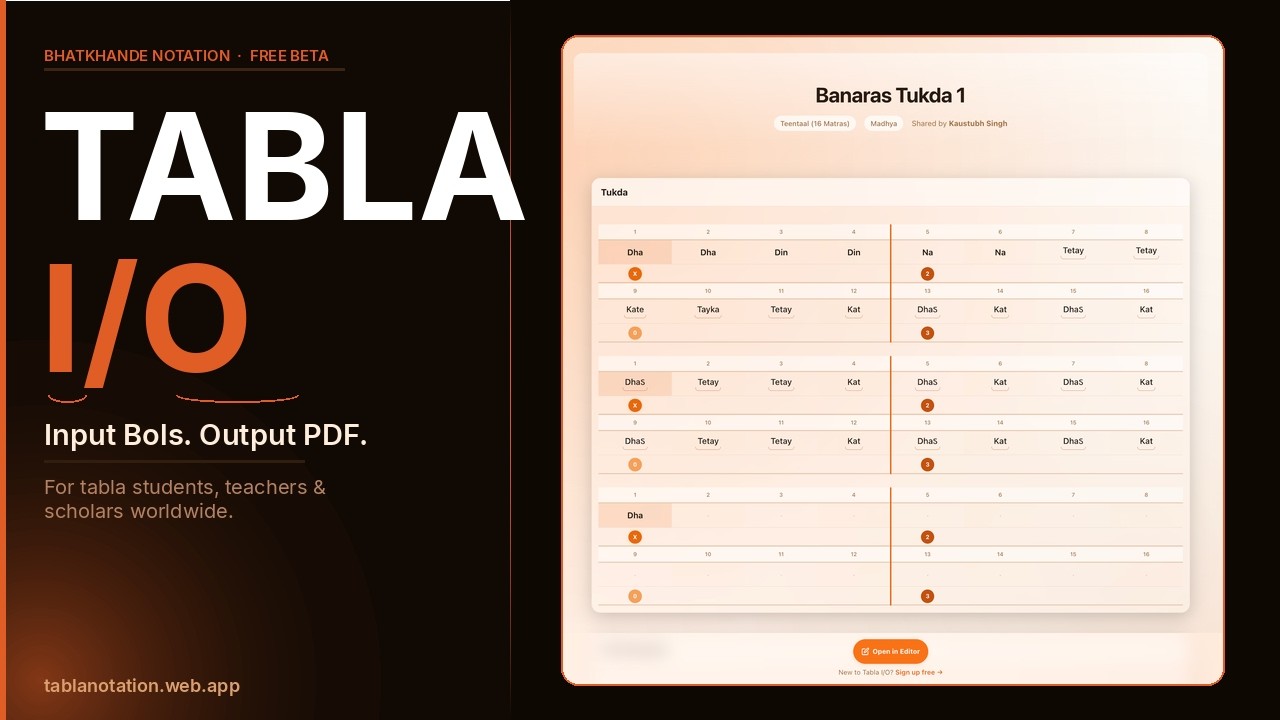
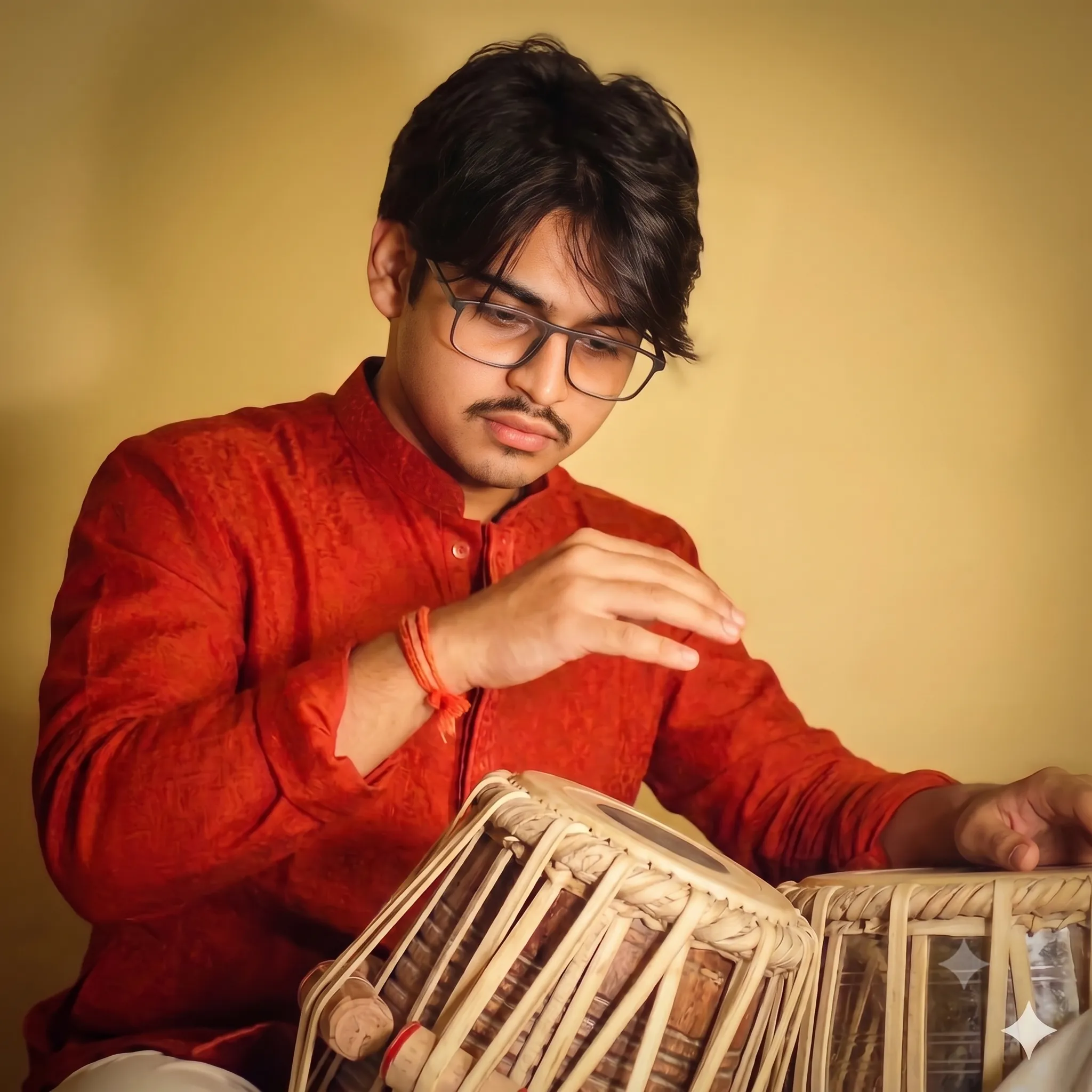
Tabla I/O gives students and teachers a structured Bhatkhande notation workspace — cloud synced, print-ready, and built by a Tabla musician who needed it himself.
🎓 Built by a Banaras Gharana tabla student and PhD researcher at the University of Delhi
Practical tools for creating, managing, and exporting Tabla compositions in a clean, focused Bhatkhande notation workflow.
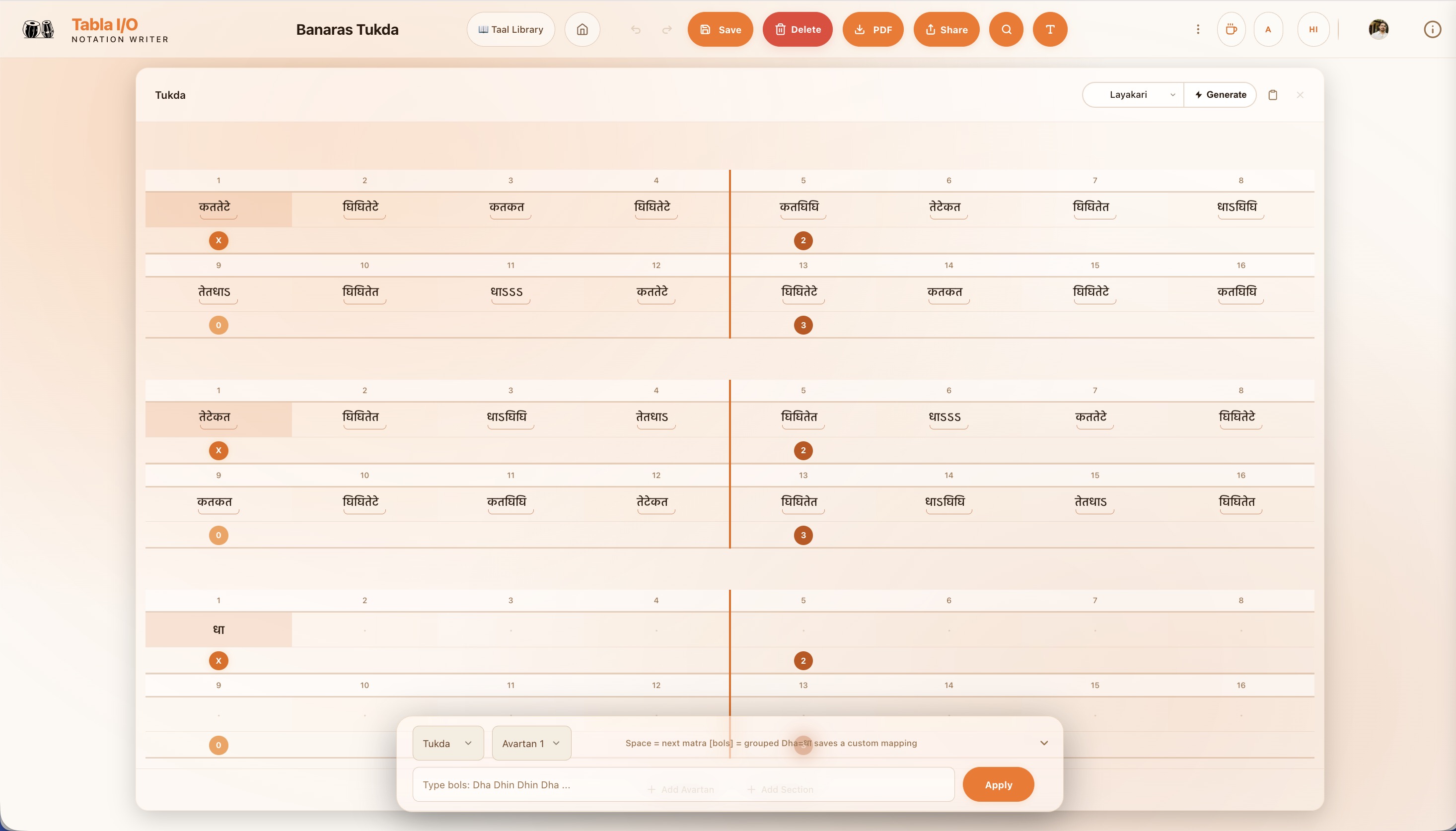
Create and edit Tabla notation in a structured grid that matches the way compositions are actually taught and read.
Type bols rapidly, move through matras quickly, and keep your attention on the composition rather than formatting.
View the same notation in English and Hindi without maintaining separate copies for different learners.
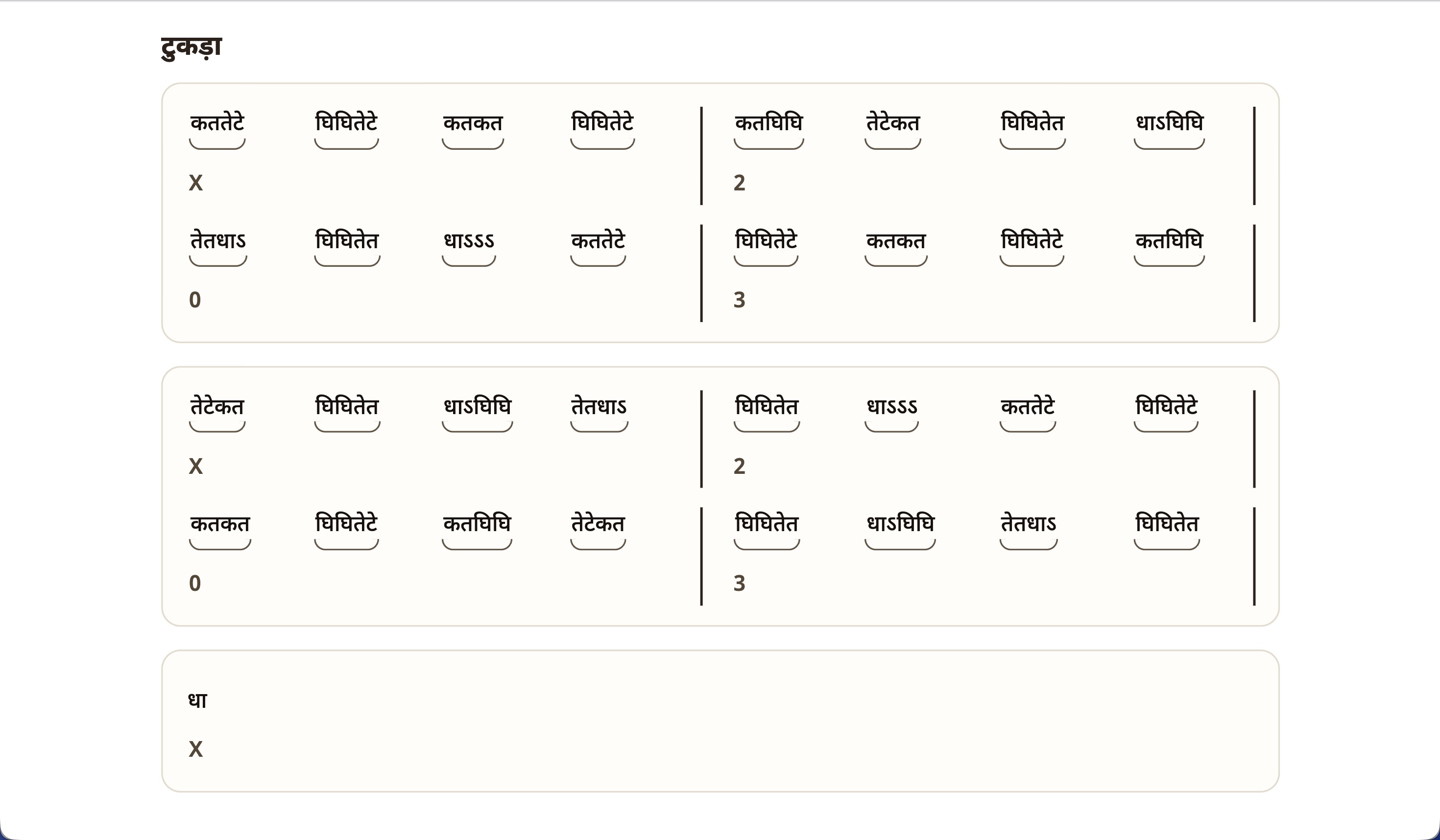
Download compositions as clean PDF handouts for printing, classroom use, or personal archives.
Gharanas, compositional forms, layakari, and terminology in one place — in English and Hindi.
Explore Knowledge →A complete reference guide for all standard Taals. Instantly look up thekas, matras, vibhaags, and taali/khali structures.
Search Database →Access a curated collection of Banaras Gharana compositions. Browse, learn, and contribute to a growing tabla heritage library.
Explore Library →Generate complex Layakaris (3/2, 5/4, 7/4, etc.) automatically from any base composition with one click.
Open Studio →Start from the Home, write bols in the editor, and export a clean PDF when you're ready to print or share.
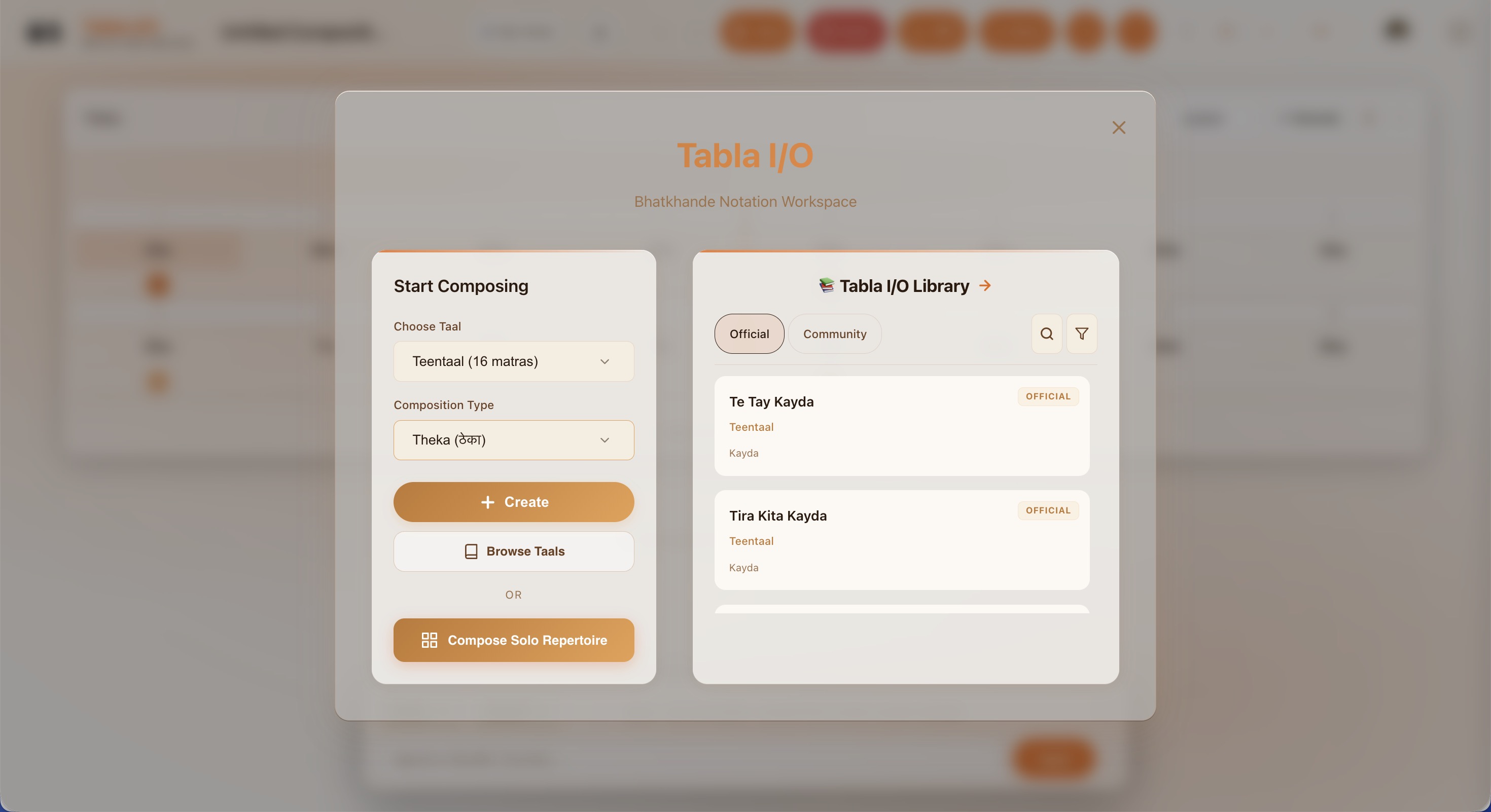
Choose the taal and composition type, then jump into the workspace with the structure set up for you.
Enter bols using the grid and quick entry bar, then build sections and avartanas as your composition grows.
Generate a printable layout for practice, classroom handouts, or your personal archive.
Start for free and get a feel for the workspace. Upgrade to Pro when you need unlimited compositions, custom dictionary support, and unlimited PDF exports.
Tabla student from Banaras and PhD Scholar at the University of Delhi, specialising in Tabla performance and notation systems. Tabla I/O was built from the belief that classical music notation deserves modern, accessible tools, and to address the lack of such resources for artists and students.